TR Racing – Synergy

The key concept underpinning the creation and philosophy of Thomas Ruyant Racing is the notion of working together.

It’s the idea that the interaction between two elements – in this case, two boats and two skippers – can give rise to a whole that is greater than the sum of its parts.

That’s why the buzzword around TR Racing at its base in Lorient on the French Brittany coast is “synergy.”

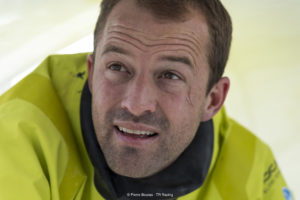
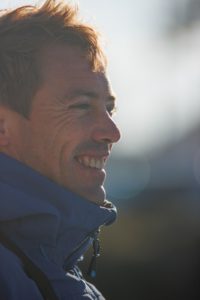
In a set-up that is unique in the IMOCA Class, two of the most talented skippers in solo ocean racing, the French veteran Thomas Ruyant and the British newcomer Sam Goodchild, are combining their talents sailing two boats from the same racing team.

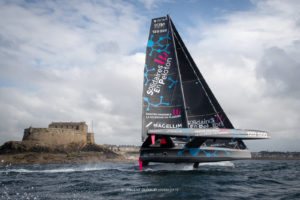
While Ruyant campaigns his new Antoine Koch/Finot Conq-designed foiler (formerly known as For People), Goodchild is running Ruyant’s old IMOCA, the 2019-vintage Guillaume Verdier-designed rocketship formerly named LinkedOut and For The Planet.

They are supported by a 30-strong team of professionals and specialists – or “ultra-specialists” as Ruyant calls them – and while the team prepares as one, Ruyant and Goodchild race hard against each other on the ocean.

Indeed this autumn they will both start in the Vendée Globe solo round-the-world race with podium credentials; Ruyant, 42, will be looking to improve on his sixth place last time, while Goodchild, 34, will be making his debut.

Thomas Gavériaux, the Chief Executive Officer of TR Racing, says the choice to switch into a team in January 2023 was based on a collective conviction of just how powerful an arrangement a two-boat set-up could be. And, he argues, the early results have more than justified that belief.

“The first place it is paying off is in the results,” said Gavériaux. “The first season with TR Racing running two boats produced seven podiums out of 15 possibles. It was two victories for Thomas, five podiums for Sam and not forgetting the IMOCA Globe Series Championship for Sam, which also reflected his participation in The Ocean Race.”

From a management perspective, Gavériaux says the creation of the team broke new ground and imagined a new way of working in a fleet that has only ever seen skippers and their shore crews prepare largely on their own. “IMOCA is a culture where teams tend to be built around one individual – that’s the history of the Class,” he explained. “Then suddenly you are asking people, who have devoted most of their career to working for a one-man-band, to realise that the world is wiser when it’s wider.”

Team-building and sharing a common goal were important early objectives at TR Racing, which is backed by Advens. “We were relying a lot on the ability of the different members of the team to have confidence in each other to the point where they were happy to share their different experiences. They all come from different backgrounds and with different levels of expertise in various fields,” added Gavériaux. “The result is that we now have a pretty good collection of highly-skilled individuals that have engaged in this process with all the reasonable questions and doubts to start off with, but who have very quickly realised that this actually works.”

While there is a five-strong dedicated shore team for each boat, the rest of TR Racing’s staff is spread across both sides of the boatshed and includes design office specialists, performance analysts, technical and composite specialists, plus staff employed in administration, accounting and management functions.

Setting up a team like this depends critically on key individuals working together and buying into the philosophy. In Ruyant and Goodchild, Gavériaux has found that chemistry as the team looks to develop and optimise its newest boat, while maintaining Goodchild’s IMOCA as an immaculately-prepared reference. “When they started talking about the team and what it could achieve, both Sam and Thomas were 300% aligned and that’s key to making sure the rest of the group has followed on,” said Gavériaux.

Perhaps the biggest single benefit of a two-boat team is the opportunity it creates for comparative testing on the water and TR Racing is imbued with the principle that, almost invariably, if one boat goes out sailing so does the other. The team uses two-boat testing to evaluate new components, to evaluate new set-ups on board and to compare performance in a host of other ways. Gavériaux says this arrangement is so effective and time-efficient, it means that “every hour we spend on the water is worth three.”

Ruyant says the two-boat element has meant that he has been able to develop and optimise his new IMOCA far quicker than he would have done had he been working on his own. But he makes the point that it is not just about comparing numbers and data.

“We set the framework and there is a lot of openness and sharing,” says the skipper who won both last year’s Bermudes 1000 Race and the Transat Jacques Vabre (TJV). “So it’s not just the team sharing information and ideas with Sam, there’s obviously also a lot of input from him too. He’s sailed on a lot of different boats, particularly multihulls, and he’s had experience in The Ocean Race. So we are feeding off each other and the technical teams too, so that’s a big plus.”

Goodchild describes the two-boat element and working together as a “massive” difference. “In the IMOCA Class now-a-days, going sailing is quite rare, so being able to line-up against each other, and validate performance choices fairly quickly, is a lot easier with two boats on the water,” he said. “If we want to test something and go number-crunching, we will see how a component works on one boat and then see which is faster – you draw conclusions a lot quicker.”

Both Ruyant and Goodchild say that one big team of specialists working on two boats means there are usually more people in the room than would be the case in a single-boat set-up, when it comes to solving a problem and looking for solutions.

“It’s more people around the same table with more ideas and you can bounce ideas off them, though you’ve still got to make a decision in the end,” said Goodchild. Ruyant agrees: “The more people there are, the more brain-storming there is and the more exchanges there are, so there’s a lot of internal problem-solving and creativity.”

Ruyant and Gavériaux say the TR Racing set-up is highly cost-efficient, especially when it comes to the shoreside functions. “There are genuine economies of scale,” explained Ruyant. “We use the same team base to prepare all year round, and we have shared logistics, shared communications, shared partners and shared tools too. All of which adds up to considerable savings. I think that two separate projects like ours would obviously cost a lot more.”

One risk of two boats and two skippers working under the same roof is that the competitive element between them can be compromised, something that is often seen in Formula 1 teams where one driver becomes the leader. In TR Racing that is not the case, as Ruyant makes clear.

“Of course there is this exchange of ideas and sharing, which is well-organised within the team, but it’s clear that once that startline is crossed, then for me, Sam will remain a competitor like any other,” he said.

For Goodchild, the benefits of sailing a fully-optimised and battle-hardened boat, which has won big races (including the Route du Rhum and the TJV), while working with a team and skipper in Ruyant who has enormous experience in the IMOCA Class, adds up to a dream package.

“From my side of things, this year it will be my first Vendée Globe and to be able to take that on from inside the structure of what was already a winning team is a massive benefit and massive advantage,” he said. “The structure of TR Racing definitely looks like a strength to me, and if you look at the results last year, you couldn’t really have hoped for much better.”

Ruyant has no doubt that TR Racing has been on the right track as it has developed from a successful one-boat team into a bigger outfit that, in Goodchild, has given an opportunity in IMOCA to one of the brightest young stars in the sport.

“This two-boat team is something new in ocean racing and in IMOCA racing,” he said. “But we like to do things differently and try out different ways of operating. These are methods we see in other sports, like motor racing, for example. If it’s well structured and well-organised, it works and that’s the case for us.”

Maxime Beaumont aux Jeux !

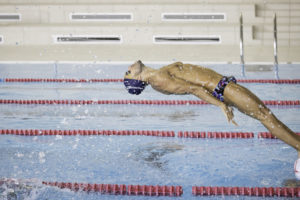
Le kayakiste Maxime Beaumont, soutenu par la Banque Populaire du Nord, a obtenu son ticket pour les Jeux Olympiques de Paris 2024. Le boulonnais participera aux épreuves de Vaires-sur-Marne en individuel sur 1000 mètres. C’est la quatrième participation consécutive du vice-champion Olympique de Rio aux Jeux. Elle récompense la pugnacité à très haut niveau de Maxime depuis toujours. A 42 ans, le nordiste s’apprête à écrire une nouvelle page de sa fabuleuse carrière au long cours.

Maxime Beaumont : « C’est un grand bonheur et une fierté de participer à mes quatrième Jeux, de représenter mon pays à la maison ! Ma performance en Coupe du Monde dernièrement avec une 7ème place en K1 est arrivée au bon moment. Je bascule dès maintenant dans ma préparation spécifique au K1 1000. Je vais enchaîner les stages et le championnat d’Europe mi-juin en K1 500 et 1000 qui me permettra de savoir où j’en suis techniquement. »

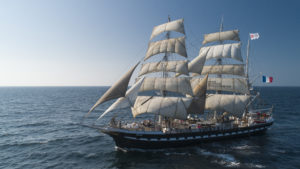
Après le SHOW Belem, la saison du navire ne fait que commencer !


Odyssée des jeunes éclaireurs de la Flamme Olympique sur le Belem – Vieux-Port de Marseille le 8 mai 2024 Photo Vincent Curutchet / Caisse d’Epargne

Un peu plus d’une semaine après son arrivée en majesté dans le Vieux-Port de Marseille et le convoyage de la Flamme Olympique de Paris 2024 entre Athènes et Marseille par les 16 jeunes éclaireurs sélectionnés par les Caisses d’Epargne en régions, le Belem arrive à Palma de Majorque. La Fondation Belem Caisse d’Epargne a repris son activité fondatrice : embarquer à bord du trois-mâts tous ceux qui veulent expérimenter la vie en équipage en totale immersion. Destination Palma, Almeria, Cadix, Lexoes, Santander en mai et début juin puis retour en France sur la côte Atlantique avec des escales très attendues à La Rochelle pour ses fêtes maritimes du 20 au 23 juin puis Bordeaux fête le vin du 27 au 30 juin.

Christelle de Larauze, déléguée générale de la Fondation Belem Caisse d’Epargne : « Quelle aventure ! Au cours de ces 12 jours de navigation entre Athènes et Marseille avec la Flamme Olympique, les 16 jeunes éclaireurs ont constitué un équipage joyeux, bienveillant, curieux de tout… un rêve éveillé où chacun a apporté sa contribution et s’est ouvert à l’autre. Je retiens le rythme si particulier de la vie embarquée, la vie communautaire, le partage très fort que nous avons eu avec les 16 jeunes éclaireurs, le très grand professionnalisme de notre équipage durant cette longue navigation, des décors fabuleux avec le passage du canal de Corinthe, le détroit de Messine, le Stromboli en activité, la Corse et une arrivée très spectaculaire à Marseille avec une superbe parade et un show à la hauteur du Belem à notre arrivée. Je tiens à remercier tous les acteurs de cet événement à commencer par les Caisses d’Epargne, notre mécène, avec qui nous avons monté cette opération. Je pense aussi aux autorités grecques et françaises qui nous ont accompagnés et évidemment Paris 2024. Nous voguons à nouveau à travers les océans actuellement et avons repris nos séjours de navigation ouverts à tous. Nous nous préparons à plusieurs grands événements en 2024 dont la Rochelle, Bordeaux et Brest. Les jeunes nous ont prouvé que le Belem était fait pour eux et je peux dire que la Fondation a clairement la volonté de s’ouvrir encore plus à la jeunesse. »

Sam Goodchild Profile

In the history of the IMOCA Class there have been few skippers who have completed a debut year to rival that of Sam Goodchild, who achieved five consecutive podium finishes in his first five races and became the 2023 IMOCA Globe Series Champion.

But who is this modest 34-year-old Englishman? A sailor who will start his first Vendée Globe in November in a proven 2019-vintage boat (the former LinkedOut) that will give him podium chances on the round-the-world course, if not an outside chance of winning, something no British sailor has yet achieved?

Goodchild had an unconventional upbringing, spending much of his childhood living aboard yachts with his parents in the Caribbean islands, an experience that has given him an extraordinary affinity with the sea and with boats. In fact if you talk to those who knew him as a teenager they say the young Goodchild was obsessed with the sea and sailing from an early age.

Charles Darbyshire, the founder of the Artemis Academy in Cowes which trained young British solo racers – Goodchild among them – says Goodchild was focused on the sea to the exclusion of everything else.

“His love was the water and sailing and that’s how we got to know him,” said Darbyshire. “What I remember of him at that time was he couldn’t actually talk about anything other than on-the-water activities – there was almost nothing more to him.”

David Bickerton, who mentored Goodchild during his teenage years when the young British sailor was at boarding school in Britain, jokes that Goodchild “grew up sleeping on the chart table” and had been on yachts “since the year dot.” He says, as a result, Goodchild is probably happier on the sea than on land and developed an unusual affinity with boats.

“He had phenomenal balance – the best I’ve ever seen,” says Bickerton. “He could walk around the boat without any need to hold on – it was extraordinary and something I’ve never seen in anyone else.”

Having lived variously on the Caribbean island of Grenada, the Isles of Scilly and in the Cornish port of Falmouth, Goodchild knows what it is to be an outsider. “My whole life, I’ve been a foreigner,” he jokes. “When I was in England, I was the kid from the Caribbean, and when I was in the Caribbean I was the kid from England. Now I’m in France, I’m the guy from England.”

Goodchild completed his school studies with A-Levels in Maths, Physics and Design & Technology, but turned down university, where he might have studied engineering, in favour of a life on the sea. In doing so, he rejected advice from his parents and others that he should get a degree and then go sailing. “I was pretty stubborn-minded about it,” he said. “I was probably a little over the top, but I discovered this world of sailing and it was something I wanted to do. Why would I look somewhere else when I’d already found it?”

Goodchild’s early experience on the water was dominated by dinghy sailing and match racing, a discipline at which he excelled, becoming the best skipper in his age group in Britain. But his real interest was in offshore racing and after gaining experience with Alex Thomson’s team and then working as a preparateur for Mike Golding, he set as his career goal taking part in the Vendée Globe.

But it has been a long journey to IMOCA as Goodchild gained experience, honed his skills and awaited the right opportunity. He completed four seasons in the Solitaire du Figaro, alongside several years racing Class 40s. He crewed on a wide range of big multihulls, including the MOD 70, Phaedo3, and the maxi-trimaran Spindrift, and then returned to the Figaro in 2020 when he threatened to become the first British winner of that event before being undone by a windless final race. He went on to win the Ocean Fifty Pro Tour in 2021 and continued sailing in that class until selected to race alongside Thomas Ruyant in the TR Racing team last year. It proved an epic first season in IMOCA that saw Goodchild sail a massive number of miles, starting with crewing on Holcim-PRB in The Ocean Race and finishing third in each of the five IMOCA races, among them the Transat Jacques Vabre (with Antoine Koch) and the Retour à la Base.

What we have learnt over the years is that Goodchild is a tough and determined competitor with an excellent temperament for top-level sport. Starting with an upbringing that nurtured his natural talent he has matured into a methodical, competent and competitive racer. Throughout he’s maintained a laser-like focus on the Vendée Globe, moving to France, learning French and working hard to master all the disciplines that that race requires.

Brian Thompson, the British skipper of Phaedo3, has sailed thousands of miles offshore with Goodchild and says he has never wavered in his Vendée Globe ambitions. And Thompson has seen him improve in all areas over the years. “He’s the same person as when I first met him 10 years ago, but just with far more skills and confidence – he’s the complete package,” said Thomspon. “He doesn’t make mistakes and is always focused on doing a good job on board and looking at the big picture as well. He will be aware of what we are trying to do navigationally and he is a very good driver.”

Thompson says Goodchild has never stopped learning. “He’s very intelligent and really thinks about his sailing, so he doesn’t get backed into a corner where he has to panic or rush things. He does it all in the right order and doesn’t miss out a step and then get into trouble later.”

Goodchild has had his fair share of setbacks, for example when possible crew selections have not materialised, when he was dismasted in the Route du Rhum in Class 40s and when he suffered a nasty head injury on board his Ocean Fifty, Leyton, at the start of the last Route du Rhum. But he has weathered these storms, aided by a nicely-balanced temperament.

“I think he hides the lows well, or manages them well, and I don’t think he has the highs,” said Darbyshire. “The kinds of things that wear other people down have not had the same effect on him. He accepts them but doesn’t let them knock him.”

Bickerton says Goodchild takes losses and reverses and uses them to work out how to improve, rather than dwelling on them in a negative way. “He doesn’t always get great results and when things do go wrong, he works out why and how to avoid it in the future, rather than flinging stuff overboard or shouting and screaming,” he said.

In the latter respect Bickerton adds that Goodchild plays a competitive game but never strays into intimidating tactics or trying to destabilise an opponent. “He is very, very competitive and absolutely determined to do very well, essentially win. But Sam is not going to be nasty. He will not be like that and I think people like him. He will be very good and make sure he does the best he can to win but he won’t cross that line,” he said.

If you ask Goodchild about his strengths, you get an idea of how modest he is despite all that he has achieved. “That’s never an easy question to answer,” he says laughing. “If I had to pick something out it would probably be being an all-rounder. I can’t think of anything which I’m really good at, but I can’t think of anything that I’m completely useless at either.”

And his weakness? He says weather and navigation is still an area he wants to strengthen, having done a lot of sailing in big multihulls when the routing was often done on shore by dedicated professional meteorologists. But there is another thing he highlights: “One of my biggest weaknesses is I want everything done as quickly as possible. I think definitely on a Vendée Globe you sometimes slow down a bit – you do things once, slowly and well…”

In terms of his evolution to the elite level, Goodchild says that after his first Figaro experiences, the years he spent on big multihulls with the likes of Thompson, Thomas Coville or Yann Guichard and their crews gave him the experience and learnings he needed. He was thrilled to come back to the Figaro in 2020 and find that he was able to mix it with some of the best sailors in the sport, an experience that re-fired his ambition for the Vendée Globe.

“I have sailed with a bunch of people who are legends of the sport and I’ve seen a bit more and learnt a bit more how they operate, and that helps in terms of realising I am capable of doing this and that a Vendée Globe is something I am capable of. It’s not going to be easy or straightforward, but I don’t go into it wondering if I am capable of it. It’s just about how well I can do it and whether I can make it to the finish and keep the whole project in one piece,” he explained.

Goodchild says being a team leader within TR Racing is a big challenge which is taking some getting used to. But, he says, with the support of the whole team and his French wife Julie – with whom he has a seven-year-old step-daughter and a two-year-old daughter – he could not be happier with the build-up to his first Vendée Globe. “There are always points for improvement and things I could spend more time on, do better and work harder on. But I feel for a first Vendée Globe, I couldn’t really hope to be better prepared to be honest,” he said.

Looking in from the outside, what we can expect to see is a man who keeps it all under control and does not give too much away whatever the trials and tribulations he goes through. Thompson reckons he has an excellent chance of winning the Vendée Globe against the best IMOCA skippers in newer boats and, if he does, Goodchild will stay cool as always.

“Yeah, if Sam wins the Vendée he won’t be any different after that – somewhere deep inside there will be a sense of accomplishment, but we won’t really know about it,” said Thompson.

Sport et Sociétal, une raison d’être ?

Odyssée des jeunes éclaireurs de la Flamme Olympique sur le Belem – 8 mai 2024 Photo Vincent Curutchet / Caisse d’Epargne

Sport et Sociétal, une raison d’être ?

Il y a plus de 10 ans, j’avais participé à la démarche Sport responsable impulsée par Generali et présidée par Zinedine Zidane puis Sébastien Chabal. A cet époque déjà, les projets portés montraient à quel point le Sport était un sacré facteur de réinsertion et de motivation pour tous et notamment pour les personnes les plus démunies.

La suite …

Le défi Voile Solidaires En Peloton qui, à travers un voilier de compétition skippé par Thibaut Vauchel-Camus, met en avant les 120 000 patients atteints de la Sclérose En Plaques, les projets du navigateur Thomas Ruyant et son partenaire Advens avec LinkedOut, we sail for People and Planet, le Réseau Entourage et Team for the Planet et maintenant ses deux voiliers Vulnerable, nom d’une grande campagne à venir pour le prochain Vendée Globe, les engagements de Perrine Laffont et Stève Stievenart pour l’environnement, l’association Lames de Joie, Maxime Sorel, parrain national de Vaincre la Mucoviscidose, la mixité prônée par Isabelle Joschke, un équipage 100% féminin mené par Alexia Barrier, The Famous Project,  … m’ont permis d’acter réellement que le sport dans toutes ses composantes, amateur et professionnel, est porteur de valeurs si puissantes qu’il peut contribuer à créer une chaîne de solidarité auprès du plus grand nombre.

L’épopée que je viens de vivre à bord du Belem avec 16 jeunes éclaireurs sélectionnés par les Caisses d’Epargne en région et le transport de la Flamme Olympique entre Athènes et Marseille, m’a définitivement convaincu. Sport et Sociétal sont inséparables, indispensables.

En 2024, la donne a changé. On ne peut plus parler de Sport sans l’associer à des actions concrètes pour l’autre ou pour la Planète et cela doit devenir une raison d’être dans le sponsoring global.

Il est vraiment le temps de changer de logiciel, donner du sens aux performances et voir le Sport avant tout comme un vecteur d’inclusion, comme un moyen d’engager le plus grand nombre au service des personnes les plus fragilisées par la vie et pour préserver notre environnement.

Chez TB Press Impact, c’est notre marque de fabrique et nous souhaitons amplifier, dans les années qui viennent, nos actions Sport et Sociétal.

Marseille en vue pour les Jeunes Eclaireurs du Belem

Odyssée des jeunes éclaireurs de la Flamme Olympique sur le Belem – 8 mai 2024 Photo Vincent Curutchet / Caisse d’Epargne

Quelle aventure ! Les quatorze jeunes éclaireurs sélectionnés par chacune des Caisses d’Epargne régionales pour leur sens de l’engagement et les valeurs qu’ils portent abordent la fin d’une navigation de 12 jours entre le Pirée en Grèce et Marseille à bord du trois-mâts Belem pour ramener en France la Flamme Olympique de Paris 2024. Demain à 11h00, Le Belem et les Jeunes Eclaireurs seront accompagnés par une myriade de bateaux pour une grande parade sur le plan d’eau de la cité phocéenne. Ils entreront ensuite en « majesté » dans le Vieux-Port de Marseille à 19h00 précises.


Une incroyable aventure pour les Jeunes Eclaireurs


Ils n’ont pas de mots assez forts pour décrire ce qu’ils viennent de vivre durant les 12 jours de navigation, entre le Pirée et Marseille, pour apporter en France la Flamme Olympique de Paris 2024, symbole de solidarité et de fraternité entre les pays. Il faut dire que ce périple en haute mer était une grande première mondiale puisque jamais la célèbre Flamme n’avait été convoyée par la mer dans le pays hôte des Jeux Olympiques et Paralympiques. Il faut dire également que cette navigation a été haute en couleurs géographiques et a infusé un collectif qui s’est montré fort, soudé et solidaire au quotidien tout au long du voyage. De véritables ressources qui avaient permis aux Jeunes Eclaireurs de s’illustrer lors des stages de navigation organisés par les Caisses d’Epargne et les associations qui les accompagnent dans le domaine de l’insertion et d’être sélectionnés pour vivre une aventure extraordinaire à bord du navire de la Fondation Belem Caisse d’Epargne, monument historique, dernier trois-mâts barque d’Europe.


Une navigation collective, solidaire et engagée


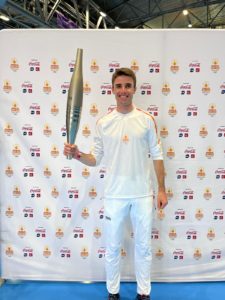
Le départ du Pirée était fort en émotions avec la montée de la Flamme à bord du Belem, portée par Tony Estanguet, Président du comité d’organisation des Jeux Olympiques et Paralympiques de Paris 2024, aux côtés de Nicolas Namias, Président du directoire du Groupe BPCE, et Amélie Oudéa–Castéra, ministre des Sports et des Jeux Olympiques et Paralympiques de France. Les quatorze jeunes éclaireurs Caisse d’Epargne et le commandant du Belem, Aymeric Gibet, recevaient la Flamme, pourvue de sa lanterne, avec de larges sourires et beaucoup de concentration face à la mission qui leur était confiée de l’acheminer jusqu’à l’hexagone.

La suite en mer fut belle, très belle : passage du majestueux canal de Corinthe et du détroit de Méssine entre l’Italie et la Sicile, observation des éruptions régulières du volcan Stromboli, vue magnifique sur l’île italienne de Montecristo et la Corse, navigations intenses dans la tempête Tyrrhénienne, prises de quarts pour les jeunes, participation active à la vie du bord entre les manœuvres, le nettoyage, le service des repas et de nombreux ateliers dispensés par les membres de l’équipage. Une aventure historique et inoubliable pour ces Jeunes.

Un 8 mai exceptionnel à Marseille


Place à la fête demain avec une parade de 1024 bateaux et plus de 150 000 personnes attendues afin d’assister à l’arrivée du Belem et de la Flamme. Ce sera alors le début d’une nouvelle aventure, le Relais de la Flamme Olympique dont Caisse d’Epargne est le Parrain officiel, avec 68 jours de fête sur tout le territoire et les Outre-mer, jusqu’à la cérémonie d’ouverture, le 26 juillet prochain.


Ils ont dit :

Pour Jacques-Olivier Hurbal, directeur du Développement Caisse d’Epargne : « Caisse d’Epargne se réjouit d’être l’un des principaux acteurs du Prologue du Relais de la Flamme de Paris 2024 et d’apporter la magie des Jeux en France avec le Trois-Mâts Belem dont elle est mécène. Durant cet incroyable voyage, les 14 jeunes des territoires des Caisses d’Epargne ont eu le privilège de ramener la Flamme à Marseille et de vivre une aventure humaine et collective. Ces jeunes éclaireurs, ambassadeurs de leur région, ont symbolisé tout l’engagement de la marque en faveur de la jeunesse et de l’inclusion et ont su faire rêver les Français. »

Zabih Yaqbee, Caisse d’Epargne, Aquitaine Poitou-Charentes : « Cette aventure a augmenté ma fierté et ma confiance. Je suis trop content. Cela m’a donné beaucoup d’émotions. Je n’avais jamais vécu ça dans ma vie. Avant, je pensais qu’aux mauvais côtés de ma vie, maintenant cela a changé. »

Shawn Caillet, Caisse d’Epargne Auvergne Limousin : « Ce périple a été incroyable. J’ai découvert de beaux paysages. J’ai aimé ces 12 jours en mer. J’avais des camarades très sympathiques. Cela m’a apporté de la joie. »

Noémie Olejniezak, Caisse d’Epargne Bourgogne Franche – Comté : « Que c’était beau ! J’ai pris de l’expérience, du savoir-vivre et l’idée qu’il faut s’entraider. »

Eleonor Budak, Caisse d’Epargne Bretagne Pays de la Loire : « C’est difficile de définir cette aventure en trois mots mais je dis : magique, unique et authentique. Sur le plan personnel, cette navigation m’a donné de la confiance en moi et de la patience. »

Yassine Nassah, Caisse d’Epargne CEPAC : « C’est un rêve que j’ai découvert et que j’ai réalisé, voilà ce que je peux dire pour définir cette navigation de 12 jours. Cette aventure m’a apporté une ouverture d’esprit et appris à connaître des personnes merveilleuses. Cela m’a permis de savoir ce que je voulais faire. Je veux découvrir le monde. »

Manon Guariglia – Marseille, Caisse d’Epargne Côte d’Azur : « J’ai été émerveillée par ce périple entre le Pirée et Marseille. La force de la nature m’a impressionnée. La complicité entre nous m’a aussi marquée. Mon vivre ensemble s’est amélioré et je veux poursuivre cette vie en collectivité, pourquoi pas en colocation. Je me demande même si je ne vais pas tenter un diplôme dans la marine afin de remonter sur un bateau et revivre ce genre d’expérience. »

Nathan Leverd, Caisse d’Epargne Grand Est Europe : « Magnifique ! Nous avons vu des paysages incroyables. Cette navigation avec la Flamme Olympique de Paris 2024 m’a tenu à cœur et cela a été un honneur d’aller au bout de cette aventure. Cette expérience m’a grandi. »

Clara Labruyère, Caisse d’Epargne Hauts de France : « Incroyable et relaxant définissent cette navigation de 12 jours pour moi. Mes angoisses se sont dissipées pendant le séjour et j’ai trouvé ça trop cool. Je me sens très chanceuse. Cette expérience restera à jamais dans ma mémoire. J’ai pris de la confiance en moi. Cela m’a appris à parler et à sortir du lot. Maintenant, j’ai une voix. Je me sens mieux dans mon corps et dans ma tête après ce périple. »

Hugo Girbal, Caisse d’Epargne Ile-de-France : « C’est un peu tôt pour dire ce que cette longue navigation avec la Flamme Olympique m’a apporté mais les rencontres ont été importantes pour moi. Cette aventure a été complétement inoubliable pour moi. »

Chloé Marques, Caisse d’Epargne Languedoc – Roussillon : « Inouï, inoubliable et à refaire, c’est ma façon de définir le transport de la Flamme Olympique à bord du Belem. Cela me donne des idées pour mon avenir. Je souhaite être navigatrice et dans un premier temps devenir matelot comme sur le Belem ».

Lucas Desrues, Caisse d’Epargne Loire – Centre : « Incroyable, unique et inoubliable cette navigation avec la Flamme ! Je me suis ouvert aux gens, moi le timide et le réservé. Je suis moins dans mon coin. »

Steven Etcheverry, Caisse d’Epargne de Midi-Pyrénées : « Le Belem est un monument historique que nous avons eu la chance de découvrir. Cela a été très précieux d’échanger avec les autres jeunes. On est tous très fiers de représenter nos régions et de participer à cet événement. Notre collectif est très fort. J’ai pris goût au bateau et à la mer alors pourquoi pas être serveur dans la Marine. »

Nathan Le Normand, Caisse d’Epargne Normandie : « C’est l’aventure d’une vie ce que nous venons de vivre et beaucoup de belles rencontres. Cette épopée m’a apporté de l’expérience pour ma future carrière, de la maturité et le goût de l’aventure. »

Thomas Tacnet, Caisse d’Epargne Rhône Alpes : « Les rencontres avec toutes les personnes à bord ont été très intéressantes. Nous nous sommes construits une vie de famille au fil des jours.  Cela m’a apporté des valeurs, de la cohésion et du savoir-faire. Merci aux Caisses d’Epargne. »


À propos de Caisse d’Epargne

Les 15 Caisses d’Epargne sont des banques coopératives au service de leur région. Avec 17,2 millions de clients (dont 4,4 millions de sociétaires), elles accompagnent toutes les clientèles : particuliers, professionnels, entreprises, acteurs de l’économie sociale, institutions et collectivités locales. Elles privilégient le meilleur niveau de service dans tous les domaines : collecte et gestion de l’épargne, versement des crédits, équipements en moyens de paiement, gestion de patrimoine, projets immobiliers, assurances. Les Caisses d’Epargne font partie du Groupe BPCE, 2e groupe bancaire en France.